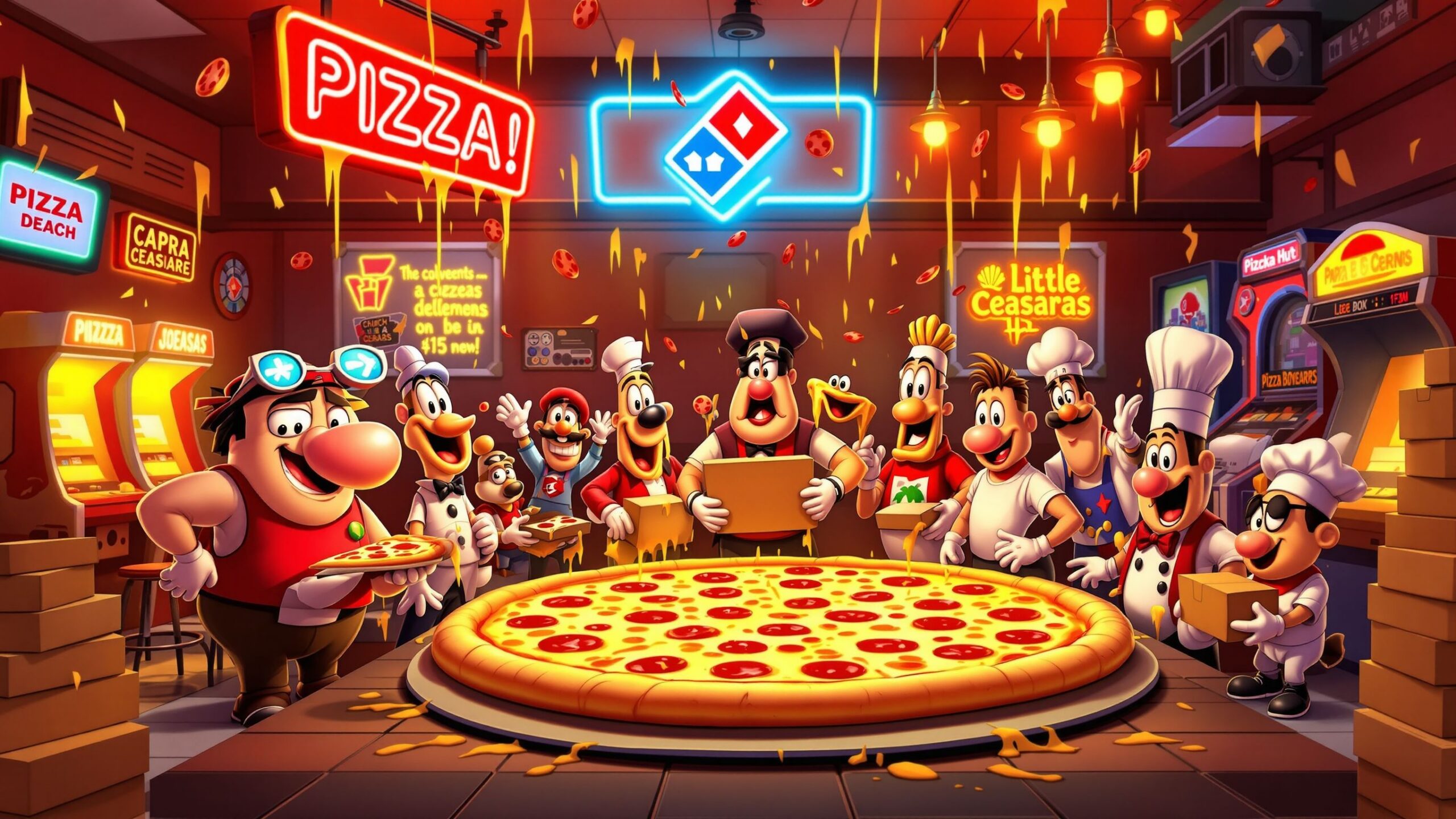
Pizza has always been more than just a delicious meal—it has been a cultural phenomenon filled with unforgettable commercials, catchy slogans, and larger-than-life mascots. Throughout the 1970s, 1980s, and 1990s, pizza chains competed not only with their recipes but also with memorable characters who entertained families during television commercials, sporting events, comic books, and promotional campaigns. These mascots became household names, helping brands establish loyal followings while creating nostalgic memories for millions of pizza lovers. While some advertising icons have remained recognizable over the years, many legendary pizza mascots have quietly disappeared despite their popularity. Some were mischievous troublemakers, others were cheerful chefs or talking pizzas, and a few became pop culture legends whose influence extended far beyond restaurant advertising. Today, nostalgia has become more powerful than ever, with classic mascots making surprise appearances across entertainment, merchandise, and social media. That raises an interesting question: which pizza mascots deserve another chance to shine? From the chaotic villain who tried to ruin deliveries to the animated pizza-loving characters who once dominated Saturday morning television, these forgotten personalities still hold a special place in the hearts of fans. Here are the Top 10 Pizza Mascots That Deserve a Comeback.
#1: The Noid
Few advertising mascots have achieved the level of recognition—and bizarre history—that The Noid earned during his time as Domino’s Pizza’s unforgettable nemesis. Introduced in the mid-1980s, The Noid wasn’t actually promoting pizza itself. Instead, he represented everything customers hated about ordering pizza: cold deliveries, crushed boxes, late arrivals, and ruined dinners. Domino’s built an entire advertising campaign around the promise that their speedy delivery service could outsmart this chaotic little villain every single time. Dressed in a bright red bunny-like suit complete with floppy ears, oversized gloves, and a mischievous grin, The Noid instantly stood out from virtually every other fast-food mascot of the era. Unlike friendly chefs or smiling slices of pizza, he was a lovable troublemaker whose failures became the punchline of every commercial.
The character’s personality was wonderfully unpredictable. He was clumsy, impatient, and endlessly determined to sabotage Domino’s deliveries using outrageous traps and cartoon physics. Whether he attempted to freeze pizzas, flatten delivery cars, launch giant slingshots, or create impossible obstacle courses, his elaborate schemes always backfired in spectacular fashion. Watching The Noid fail became part of the entertainment, giving audiences something to anticipate every time a Domino’s commercial aired.
One reason The Noid became such a cultural phenomenon was his versatility. Rather than appearing in just television commercials, he quickly expanded into comic books, collectible toys, arcade promotions, Halloween costumes, and even his own Nintendo Entertainment System video game, Yo! Noid. Although the game originally began as an unrelated Japanese platformer, it was reworked so players controlled The Noid through dozens of colorful levels while collecting pizzas and battling bizarre enemies. Today, retro gaming collectors often seek out the title because it represents one of the strangest licensed video games ever released.
The Noid’s design also deserves recognition. Despite resembling a rabbit, his appearance was intentionally odd enough that nobody could easily define exactly what he was. His enormous ears bounced as he moved, his exaggerated facial expressions made him feel like a Saturday morning cartoon villain, and his hyperactive movements gave every commercial an energetic pace. The animators often exaggerated his physical comedy, allowing him to stretch, bounce, crash, and tumble in ways that made him memorable for children while amusing adults.
One hidden gem many people don’t realize is how influential The Noid became within the advertising industry. Marketing experts frequently cite him as one of the first brand mascots whose primary role wasn’t representing the product itself but rather embodying the problem the company promised to solve. Domino’s wasn’t simply selling pizza—they were selling reliable delivery. The Noid symbolized every obstacle standing in the way of hot pizza reaching customers quickly.
Unfortunately, The Noid’s career took an unexpected turn in 1989 after a real-life hostage incident involving a man who mistakenly believed Domino’s advertisements were personally targeting him because of his surname. Although the character itself had nothing to do with the tragedy, Domino’s gradually retired him from major advertising campaigns to avoid unwanted associations. It remains one of the most unusual chapters in advertising history.
Despite disappearing from television, The Noid never truly vanished from popular culture. Domino’s has occasionally revived him in limited promotions, anniversary campaigns, mobile games, and nostalgic marketing events. Each return has generated excitement among longtime fans who remember his hilarious antics from childhood. Younger audiences have also embraced the character through internet memes and retro commercial compilations, proving his appeal extends across generations.
More than three decades after his debut, The Noid remains one of the most recognizable pizza mascots ever created. His chaotic personality, slapstick humor, unforgettable appearance, and surprising legacy make him the perfect candidate for a full-scale comeback. In today’s world of nostalgic reboots, few advertising icons seem better suited for a triumphant return than the little red menace who simply couldn’t avoid Domino’s pizza.
#2: Pizza Head
If there was ever a mascot who perfectly captured the playful spirit of 1990s advertising, it was Pizza Head. Introduced by Pizza Hut during one of the chain’s most creative marketing eras, Pizza Head wasn’t simply a spokesperson—he was exactly what his name suggested: a cheerful character with a steaming pizza sitting where his head should be. Equal parts bizarre and lovable, he embodied the goofy sense of humor that defined children’s television during the decade. His appearance was impossible to ignore, making him instantly recognizable whether he appeared in commercials, toy promotions, or collectible merchandise.
Pizza Head became especially popular because of his role alongside Pizza Hut’s beloved Book It! program and numerous family-oriented advertising campaigns. Rather than acting like a polished corporate mascot, he embraced silliness at every opportunity. He danced, joked, exaggerated his expressions, and celebrated everything that made pizza fun. His upbeat personality reflected the excitement many children felt when visiting Pizza Hut restaurants, which at the time were destinations filled with arcade games, red plastic cups, stained-glass lamps, and family gatherings.
One fascinating aspect of Pizza Head was how expressive his pizza face appeared despite technically being a food item. His eyes, eyebrows, mouth, and animated toppings allowed artists to create a surprisingly wide range of emotions. Whether he looked shocked, delighted, confused, or excited, audiences instantly understood what he was feeling. That expressive animation helped him compete with much more traditional cartoon mascots from competing restaurants.
During the height of his popularity, Pizza Head expanded well beyond television advertising. Pizza Hut featured him on collectible kids’ meal toys, promotional displays, activity books, in-store decorations, and various limited-edition merchandise. Many children who grew up in the 1990s remember receiving Pizza Head figurines during family pizza nights, making the character an enduring symbol of weekend outings and birthday celebrations. Vintage collectors now actively seek out original Pizza Head toys because relatively few survived in excellent condition.
One of the character’s hidden strengths was his universal appeal. Unlike mascots built around sports, celebrities, or specific trends, Pizza Head simply celebrated pizza itself. His design required almost no explanation. One glance immediately communicated that he represented fun, delicious food, and carefree family entertainment. That simplicity made him effective across different age groups and advertising formats.
Another interesting fact is that Pizza Head reflected a unique era in restaurant marketing when companies invested heavily in imaginative mascot design instead of relying solely on celebrity endorsements. His whimsical appearance stood apart from more realistic branding approaches, giving Pizza Hut a distinct visual identity that many longtime customers still remember fondly today. Even people who cannot recall specific commercials often remember “the guy with the pizza for a head.”
Pizza Head also embodied optimism. He rarely encountered conflict, and when he did, his cheerful attitude usually won the day. His enthusiasm for sharing pizza, celebrating special occasions, and bringing people together fit perfectly with Pizza Hut’s image as a gathering place for friends and families. That positive energy made him less of a salesman and more of an enthusiastic host inviting everyone to join the party.
As restaurant advertising gradually shifted toward product photography, limited-time menu items, and celebrity partnerships, mascots like Pizza Head quietly faded into the background. While these newer campaigns certainly generated attention, they lacked the whimsical charm that characters like Pizza Head brought to television. Today, many marketing experts believe memorable mascots create stronger long-term emotional connections than short-lived promotional campaigns.
A modern revival could be incredibly successful. Updated animation, social media videos, collectible merchandise, and even nostalgic restaurant décor could introduce Pizza Head to an entirely new generation while delighting adults who remember him from childhood. His colorful design, infectious enthusiasm, and unmistakable appearance remain just as entertaining today as they were decades ago.
Pizza Head represents an era when pizza commercials weren’t simply advertisements—they were miniature cartoons that families genuinely looked forward to watching. That nostalgic magic alone earns him a deserving spot near the top of this countdown.
#3: Little Caesar
Long before “Pizza! Pizza!” became one of the most recognizable advertising slogans in America, Little Caesar himself had already become the cheerful face of one of the country’s fastest-growing pizza chains. Inspired by the appearance of the Roman emperor Julius Caesar, the mascot traded historical seriousness for cartoon comedy. Wearing a toga, sandals, a laurel wreath, and carrying a spear topped with a slice of pizza, Little Caesar became an instantly recognizable character whose oversized smile and energetic personality helped define the brand for generations.
Unlike many restaurant mascots who changed dramatically over the years, Little Caesar remained surprisingly consistent. His design evolved with smoother animation and modern graphics, but his core appearance stayed faithful to the original concept. His exaggerated Roman nose, expressive eyebrows, and wide grin made him instantly memorable, while his enthusiastic catchphrase, “Pizza! Pizza!,” became part of American pop culture. Few advertising slogans have enjoyed such longevity, and even people who haven’t visited the restaurant in years can still recite it from memory.
One of the most interesting aspects of Little Caesar is that he wasn’t portrayed as a mighty emperor. Instead, he was humble, friendly, and often hilariously clumsy. Commercials frequently showed him enthusiastically presenting pizzas, stumbling through comedic situations, or celebrating incredible deals with childlike excitement. Rather than feeling larger than life, he came across as approachable, making customers feel like they were being welcomed by an old friend instead of a corporate mascot.
His Roman-inspired appearance also created endless opportunities for creative advertising. Commercials often featured ancient Roman architecture, chariots, gladiators, and marble columns, only to replace historical seriousness with ridiculous pizza jokes. Watching a toga-clad Caesar proudly march through modern suburbs while carrying fresh pizzas created a humorous contrast that audiences loved. The campaign managed to make ancient Rome unexpectedly fun, especially for younger viewers who had likely never heard of Julius Caesar before seeing the mascot.
Many fans don’t realize that the mascot’s spear originally held a pizza slice rather than a traditional weapon, reinforcing that the character was all about sharing food rather than conquering kingdoms. This clever design choice turned an object associated with warfare into a symbol of generosity and celebration. It also helped soften the character’s appearance, ensuring he remained family-friendly despite his historical inspiration.
Little Caesar has appeared in countless television commercials, billboards, packaging designs, animated advertisements, and promotional events over several decades. His remarkable staying power makes him one of the oldest continuously recognized pizza mascots in North America. Even as restaurant advertising trends shifted toward celebrity endorsements and minimalist branding, the little emperor remained an important part of the company’s identity.
Another hidden gem is how often Little Caesar poked fun at himself. Many commercials embraced self-aware humor, allowing the mascot to become the butt of jokes while still remaining lovable. Whether he accidentally dropped pizzas, exaggerated the value of special deals, or found himself caught in ridiculous misunderstandings, audiences appreciated that he never took himself too seriously. That humility helped separate him from mascots who were portrayed as flawless heroes.
The character also benefited from nostalgia. Families who grew up hearing “Pizza! Pizza!” introduced the slogan to their own children, allowing Little Caesar to become a multigenerational icon. Very few restaurant mascots can claim to have remained recognizable across more than four decades, yet he continues to appear in modern advertising campaigns with only minor updates to his appearance.
Although Little Caesar has never disappeared completely, many fans believe he deserves a much larger role in today’s marketing. Animated shorts, streaming commercials, collectible figures, comic books, and even a children’s animated series could easily bring new life to the cheerful Roman pizza enthusiast. His timeless design and universal appeal make him perfectly suited for a major revival.
With his unforgettable catchphrase, classic appearance, and decades of advertising history, Little Caesar has earned his place among the greatest pizza mascots ever created. He reminds us that sometimes the simplest characters become the most enduring, proving that a toga, a smile, and two words can leave a lasting mark on pop culture.
#4: Pasqually P. Pieplate
While many pizza mascots came from national restaurant chains, few have entertained generations of children quite like Pasqually P. Pieplate. Best known as the energetic chef and drummer from Chuck E. Cheese’s Munch’s Make Believe Band, Pasqually has spent decades combining two of life’s greatest joys: pizza and music. With his oversized chef’s hat, thick mustache, bright apron, and booming personality, he became one of the most recognizable restaurant characters of the 1980s and 1990s. Although Chuck E. Cheese himself often received most of the spotlight, Pasqually quietly became a fan favorite whose passion for cooking and performing helped define the entire experience.
Pasqually’s fictional backstory paints him as an Italian chef with a deep love for preparing delicious pizzas while simultaneously serving as the band’s enthusiastic drummer. That unusual combination made him far more interesting than a traditional restaurant mascot. He wasn’t simply advertising food—he had hobbies, friendships, and a personality that made him feel like part of an ongoing animated world. Children visiting Chuck E. Cheese could watch him perform on stage before enjoying the pizzas he supposedly prepared, creating an immersive experience unlike almost any other restaurant at the time.
His appearance contributed greatly to his popularity. Pasqually’s thick black mustache, expressive eyebrows, rosy cheeks, and perpetual smile gave him a welcoming, grandfatherly charm. His oversized chef’s hat emphasized his culinary role, while his drumsticks constantly reminded audiences that music was just as important to his character as pizza. Every detail reinforced his identity without feeling overly complicated.
One fascinating aspect of Pasqually is how much his personality evolved over the years. Early animatronic performances portrayed him as energetic, loud, and occasionally hot-tempered, particularly when things didn’t go according to plan in the band’s comedic performances. Later portrayals softened those rough edges, presenting him as a warm-hearted chef who genuinely cared about his friends and loved entertaining guests. That gradual development helped him remain relatable across different generations of children.
Many people don’t realize that Chuck E. Cheese’s animatronic stage shows were incredibly advanced for their time. Long before immersive theme park attractions became common, families visited restaurants specifically to watch robotic characters like Pasqually perform synchronized musical numbers. These performances combined storytelling, comedy, and music into an unforgettable dining experience that helped transform pizza restaurants into family entertainment centers.
Pasqually also developed a loyal fanbase because of his authenticity. Unlike mascots who existed solely for commercials, he felt like a permanent resident of the restaurant itself. Children could see him on stage, hear him sing, watch him play the drums, and even find him featured on cups, pizza boxes, birthday decorations, arcade prizes, and activity books. His presence surrounded guests throughout their visit, creating lasting memories that extended well beyond the meal.
A hidden gem in Pasqually’s history is that his design has been updated several times to keep pace with changing animation technology while preserving his signature look. Modern versions appear more polished, yet longtime fans can still instantly recognize the beloved chef thanks to his iconic mustache, chef’s uniform, and joyful expression.
As Chuck E. Cheese has modernized many of its locations by removing older animatronic stages, characters like Pasqually have naturally appeared less often. For many nostalgic adults, however, those musical performances represented the heart of the restaurant experience. Videos of classic stage shows continue attracting millions of views online, demonstrating that affection for Pasqually has never truly disappeared.
A full revival could easily introduce Pasqually to new audiences through animated streaming content, children’s books, mobile games, or interactive restaurant experiences. His dual identity as both chef and musician offers endless storytelling possibilities that extend far beyond traditional advertising. In an era where character-driven entertainment is thriving once again, Pasqually seems perfectly positioned for a well-earned comeback.
Although he often shared the stage with larger personalities, Pasqually P. Pieplate remains one of the most charming pizza mascots ever created. His love of cooking, music, friendship, and family fun continues to resonate with fans who remember singing along during birthday parties while waiting for a fresh slice of pizza to arrive.
#5: Papa John
Before restaurant advertising shifted toward emphasizing products over personalities, the founder of Papa John’s became one of the brand’s most recognizable mascots. Rather than creating a fictional cartoon character, the company built its identity around John Schnatter, better known to millions of customers simply as “Papa John.” Wearing his signature red polo shirt, baseball cap, and ever-present smile, he appeared in hundreds of commercials over several decades. His approachable, small-business image helped transform Papa John’s from a regional pizza shop into one of the world’s largest pizza chains.
What made Papa John stand out from other restaurant mascots was his authenticity. Instead of relying on exaggerated costumes or animated antics, he presented himself as someone who genuinely cared about making quality pizza. Commercials frequently showed him tossing dough by hand, selecting fresh ingredients, or personally delivering pizzas to customers. This approach reinforced the company’s famous slogan, “Better Ingredients. Better Pizza.” Customers weren’t just seeing advertisements—they were watching the man who supposedly built the company from the ground up.
One of the most interesting facts about the mascot is that the real John Schnatter actually started the business by selling his prized 1971 Chevrolet Camaro to buy pizza equipment. Working out of a small broom closet attached to his father’s tavern, he slowly built what would become an international restaurant chain. That entrepreneurial story became central to many advertising campaigns, portraying him as an ordinary person whose hard work and dedication turned a dream into reality.
Unlike many corporate spokespeople, Papa John rarely tried to be overly flashy. His personality was calm, confident, and friendly. Commercials often featured him chatting casually with employees, interacting with customers, or proudly displaying freshly baked pizzas. His understated delivery made him seem trustworthy, helping audiences believe the company’s emphasis on quality ingredients and traditional preparation methods.
Another hidden gem is how frequently Papa John appeared alongside celebrities, athletes, and sports organizations. Over the years, he shared commercials with NFL stars, NASCAR drivers, Peyton Manning, and numerous other public figures. Even when surrounded by celebrities, the focus almost always returned to pizza, reinforcing his role as the face of the company rather than simply another spokesperson.
As the company expanded internationally, Papa John’s image became recognizable in countries far beyond the United States. His face appeared on menus, delivery boxes, promotional signs, and television commercials around the world. Few founders have become as closely associated with their brands as John Schnatter did during the company’s peak advertising years.
However, his role as mascot eventually became far more complicated. Following public controversies in 2018, Papa John’s began distancing itself from its founder, removing his image from advertising and shifting toward product-focused marketing. While the restaurants continued operating under the same name, the familiar face that had represented the brand for decades largely disappeared. This marked the end of one of the longest-running founder-centered advertising campaigns in the fast-food industry.
Even so, there’s something nostalgic about the era when restaurant founders served as recognizable mascots. Papa John represented a time when businesses emphasized personal stories rather than polished marketing campaigns. His commercials focused less on flashy gimmicks and more on the idea that someone genuinely cared about every pizza leaving the oven.
While it’s unlikely the original mascot will ever fully return due to the circumstances surrounding his departure, his impact on pizza advertising remains undeniable. He helped prove that a real person could become just as memorable as any cartoon character. For decades, millions of people immediately associated his face with fresh dough, garlic dipping sauce, and hot pizzas delivered to their doors.
Love him or dislike him, Papa John occupies a unique place in pizza mascot history. His decades-long presence shaped one of the most recognizable restaurant brands in the world and demonstrated how a founder’s personality could become inseparable from the company’s identity.
#6: The Pizza Hut Pizza Lovers (The Pizza Hut Kids Club Characters)
During the late 1980s and throughout much of the 1990s, Pizza Hut embraced a style of marketing that celebrated imagination, friendship, and family fun. While Pizza Head often served as the company’s most recognizable mascot, he wasn’t alone. Pizza Hut introduced a colorful collection of cartoon pizza lovers and Kids Club characters who appeared throughout restaurants, activity books, commercials, educational promotions, and especially the beloved Book It! reading program. Although they never became as famous individually as some restaurant mascots, together they represented one of the most charming eras in Pizza Hut history.
These animated characters came in many forms, including cheerful slices of pizza, energetic children, playful food-themed personalities, and quirky cartoon companions who encouraged reading, sharing meals, and spending time with family. Their bright colors, exaggerated expressions, and playful adventures transformed Pizza Hut into more than just a restaurant—it became a destination where kids could earn personal pan pizzas simply by reading books.
One reason these characters remain so memorable is their connection to childhood accomplishments. Millions of students participated in the Book It! program, proudly receiving certificates and colorful buttons after reaching reading goals. Visiting Pizza Hut to redeem a free pizza became a reward many children eagerly anticipated. The mascots helped reinforce the excitement, appearing on posters, menus, activity sheets, and classroom materials that made reading feel like an adventure rather than homework.
Unlike mascots created solely to sell products, these characters were tied to positive experiences. They celebrated education, birthdays, family dinners, school achievements, and weekend outings. Many children have fond memories of sitting beneath Pizza Hut’s iconic stained-glass lamps while coloring activity pages featuring these cheerful cartoon friends as they waited for steaming pizzas to arrive at the table.
The personalities of the Kids Club cast varied widely. Some were adventurous, others goofy, and many simply loved sharing pizza with friends. Their playful interactions created miniature stories that encouraged teamwork, kindness, and curiosity. Rather than focusing exclusively on food, the characters reinforced Pizza Hut’s identity as a welcoming place for celebrations and family gatherings.
One fascinating detail is how heavily Pizza Hut invested in children’s entertainment during this era. Restaurants frequently hosted birthday parties complete with arcade games, balloon decorations, collectible cups, and promotional toys featuring these mascots. For many families, Pizza Hut wasn’t chosen solely because of the menu—it was selected because children genuinely enjoyed spending time there. The mascots played a significant role in creating that atmosphere.
Hidden among collectors today are countless pieces of memorabilia featuring these forgotten characters. Vintage Kids Club buttons, coloring books, promotional VHS tapes, activity placemats, bookmarks, school reading certificates, and collectible toys have become highly sought-after nostalgia items. Many adults who discover these items instantly remember earning free pizzas after finishing stacks of library books or celebrating birthdays surrounded by friends.
As restaurant marketing evolved toward digital apps and limited-time menu promotions, many of these charming cartoon personalities quietly disappeared. The focus shifted away from storytelling and toward convenience, leaving behind a generation of mascots that had once helped define childhood experiences. Although Pizza Head occasionally receives nostalgic attention, the larger cast of Pizza Hut’s family-friendly characters is often overlooked despite their lasting impact.
A revival of these mascots could fit perfectly into today’s nostalgia-driven culture. Animated shorts on social media, updated Book It! campaigns, collectible merchandise, children’s books, or even limited-edition retro restaurant décor could reconnect longtime fans with the characters they grew up loving while introducing them to a new generation of young readers.
The Pizza Hut Kids Club characters remind us that some of the greatest mascots aren’t remembered because they were loud or outrageous—they’re remembered because they became part of cherished family traditions. For countless children, earning a free pizza after reading a good book felt like a genuine achievement, and these colorful characters helped make those memories unforgettable.
#7: Bigfoot Pizza
Unlike most entries on this list, Bigfoot Pizza wasn’t a traditional mascot—it was a larger-than-life advertising character built around one of Pizza Hut’s most famous limited-time menu items. Introduced in the early 1990s, Bigfoot Pizza became an instant sensation thanks to its enormous rectangular shape, extra-large size, and bold marketing campaign that embraced adventure, mystery, and larger-than-life fun. While the pizza itself eventually disappeared from menus, the legendary “Bigfoot” personality that surrounded it remains one of the most memorable advertising concepts Pizza Hut ever created.
The campaign cleverly borrowed from the famous North American legend of Bigfoot, the elusive creature said to roam forests while leaving behind enormous footprints. Instead of portraying Bigfoot as frightening, Pizza Hut transformed the mythical giant into a fun-loving symbol of oversized meals and family gatherings. Commercials often featured exaggerated wilderness expeditions, mysterious sightings, gigantic footprints, and humorous attempts to “capture” the massive pizza before it disappeared. The blend of folklore and comedy instantly caught viewers’ attention.
One reason the Bigfoot campaign stood out was its sheer scale. At the time, Pizza Hut marketed the pizza as one of the largest pizzas available from a national chain. Measuring roughly two feet long, the rectangular pie was designed specifically for sharing. Families, sports teams, birthday parties, and large gatherings suddenly had a pizza that felt like an event rather than just another dinner order. Even the name “Bigfoot” suggested something legendary that couldn’t be ignored.
The commercials embraced this playful exaggeration. Explorers searched forests for clues, witnesses described unbelievable sightings, and enormous footprints mysteriously appeared wherever the pizza went. Rather than focusing solely on ingredients, Pizza Hut created an entertaining narrative that encouraged audiences to imagine the pizza as an almost mythical discovery. This storytelling approach helped the campaign stand apart from competitors whose commercials focused primarily on price or toppings.
Many people don’t realize that the Bigfoot Pizza launch became one of Pizza Hut’s biggest promotional events of the decade. Restaurants decorated stores with themed displays, television commercials aired frequently during prime-time programming, and promotional materials emphasized the pizza’s enormous size. The campaign generated significant buzz because it successfully combined pop culture’s fascination with cryptids and legends with the universal appeal of pizza.
Another hidden gem is how the Bigfoot Pizza became closely associated with sleepovers, Little League celebrations, and family movie nights. Because of its size, many households viewed ordering one as something special rather than routine. Children often remember gathering around the oversized rectangular box while arguing over the biggest slices. That emotional connection helped cement Bigfoot Pizza as more than just another menu item—it became part of memorable family experiences.
The campaign also reflected a fascinating era of advertising when restaurants weren’t afraid to build entire fictional worlds around individual products. Today, most limited-time menu items receive only a few commercials before disappearing. Bigfoot Pizza, however, felt like a full-fledged character with its own mythology, personality, and identity. It proved that creative storytelling could make even a pizza feel legendary.
Although Pizza Hut has occasionally revived the Bigfoot name in nostalgic conversations, the original campaign has never fully returned. Fans continue requesting its comeback online, with many reminiscing about both the oversized pizza and the imaginative commercials that surrounded it. Social media discussions frequently ask whether today’s restaurants could recreate the excitement generated by the original promotion.
Bringing Bigfoot Pizza back would likely be met with enormous enthusiasm. Modern advertising could lean into internet culture, cryptid memes, augmented reality experiences, and collectible merchandise while preserving the playful mystery that made the original campaign so entertaining. A mascot built around oversized fun feels perfectly suited for today’s nostalgia-driven audiences.
Bigfoot Pizza proved that sometimes the most memorable mascots aren’t individual characters at all—they’re ideas brought to life through clever storytelling. Its legendary status continues decades after disappearing from menus, making it one of the most deserving pizza advertising icons ready for another adventure.
#8: Chuck E. Cheese
Although most people think of Chuck E. Cheese as an entertainment mascot rather than a pizza mascot, it’s impossible to separate the famous mouse from the restaurant that introduced millions of children to pizza parties, arcade games, birthday celebrations, and family entertainment. Since his debut in the late 1970s, Chuck E. Cheese has become one of the most recognizable restaurant mascots in the world, serving as the cheerful face of a business built around pizza, games, music, and unforgettable childhood memories.
Chuck E. Cheese began as a wisecracking animatronic mouse created for a revolutionary restaurant concept that combined dining with interactive entertainment. Wearing a baseball cap, colorful shirt, sneakers, and an infectious smile, he quickly became the star attraction of every location. Unlike traditional fast-food mascots who appeared only in commercials, Chuck E. Cheese welcomed guests in person through animatronic performances, stage shows, birthday appearances, arcade games, prize counters, and merchandise throughout the restaurant.
His personality evolved dramatically over the decades. Early versions portrayed him as a sarcastic, street-smart entertainer with a mischievous sense of humor. As family entertainment trends changed, the character gradually transformed into a friendlier, more energetic host focused on kindness, teamwork, and celebrating with children. These updates helped Chuck E. Cheese remain relevant while still preserving the charm that made him famous.
One fascinating fact many fans don’t know is that the character has gone through multiple redesigns over the years. His clothing, facial features, voice actors, and animation style have all changed significantly since the late 1970s. Despite those updates, his core identity has remained remarkably consistent: he’s still the fun-loving mouse who invites everyone to enjoy pizza while making lasting memories with friends and family.
Chuck E. Cheese’s connection to pizza extends far beyond simply representing the restaurant. For millions of children, their earliest memories of pizza involve birthday parties held beneath flashing arcade lights while Chuck E. Cheese performed songs on stage. The smell of freshly baked pizza mixed with the sounds of arcade machines created an experience unlike any other restaurant. In many ways, Chuck himself became the mascot not only for the brand but also for childhood celebrations.
Another hidden gem is the enormous amount of media produced around the character. Over the years, Chuck E. Cheese has starred in television commercials, educational videos, music albums, animated shorts, children’s books, online games, collectible toys, and seasonal promotions. His songs became surprisingly memorable, and many adults can still recall lyrics from performances they watched decades ago during birthday parties.
As entertainment technology evolved, many Chuck E. Cheese locations retired their classic animatronic shows in favor of digital dance floors and modern attractions. While these changes appealed to new audiences, they also sparked a wave of nostalgia among adults who grew up watching Chuck and his band perform live. Videos of vintage stage shows continue attracting millions of online views, proving that affection for the original characters remains incredibly strong.
Chuck E. Cheese also represents an important moment in restaurant history. Before family entertainment centers became common, his restaurants pioneered the concept of combining quality pizza with games, live performances, prizes, and interactive experiences. Many competitors attempted to copy the formula, but few achieved the same level of cultural recognition.
A full-scale revival of classic Chuck E. Cheese—including retro animation, vintage merchandise, classic music performances, and nostalgic restaurant nights—would almost certainly excite longtime fans. Younger audiences would also have the opportunity to experience the whimsical atmosphere that made the original locations so beloved.
While some may think of him primarily as an arcade mascot, Chuck E. Cheese has always been inseparable from pizza culture. For generations of families, he represented laughter, celebrations, and sharing slices around the table after spending hours playing games with friends. That enduring connection makes him one of the greatest pizza mascots ever created and one that absolutely deserves another moment in the spotlight.
#9: The Pizza Hut Cuppy Characters
Long before social media mascots and viral marketing campaigns became the norm, Pizza Hut quietly introduced a delightful cast of animated characters that appeared on children’s cups, placemats, activity books, in-store displays, and promotional merchandise. Known by many nostalgic fans as the “Cuppy Characters,” these cheerful cartoon personalities weren’t always given individual names, but they became a memorable part of countless family pizza nights throughout the late 1980s and 1990s. Their colorful designs, playful expressions, and imaginative adventures helped transform an ordinary meal into an experience children looked forward to every weekend.
The Cuppy Characters were exactly the kind of mascots that rewarded observant kids. Instead of simply decorating disposable drink cups, they created tiny worlds filled with pizza slices, smiling toppings, talking vegetables, goofy chefs, playful animals, and adventurous food-themed friends. Children often spent the entire meal examining every illustration while waiting for their pizza to arrive, discovering funny details hidden throughout the artwork. Each visit felt a little different because different cups often featured new scenes and characters.
One of the biggest reasons these mascots became so memorable was that they weren’t tied to television commercials. Instead, they lived inside the restaurant itself. Kids interacted with them while coloring activity pages, playing games printed on placemats, solving puzzles, or sipping drinks from collectible cups. That hands-on experience made them feel like companions rather than advertisements. Many children formed stronger memories of these illustrations than they did of national television campaigns simply because they spent more time looking at them during family dinners.
Their personalities, although rarely explained through dialogue, came across through expressive artwork. Some characters looked adventurous, others appeared silly or clumsy, and many wore oversized chef hats while proudly carrying pizzas nearly as large as themselves. Bright smiles, exaggerated eyes, and cartoon-style movement made every illustration feel alive, encouraging children to invent their own stories about the characters while waiting for dessert.
Another fascinating detail is how collectible many of these cups eventually became. Pizza Hut frequently released different cup designs, encouraging families to bring home entire sets. Years later, vintage collectors actively search for these original promotional items because they capture the colorful aesthetic of one of Pizza Hut’s most creative eras. Some collectors even specialize exclusively in restaurant drinkware, with complete Cuppy Character sets becoming surprisingly desirable pieces of nostalgia.
The artwork itself deserves recognition. Rather than relying on generic branding, Pizza Hut invested in professional illustrators who packed each design with tiny visual jokes, hidden details, and playful backgrounds. Children might notice a pepperoni character skateboarding across melted cheese, a mushroom riding a bicycle, or a slice of pizza surfing through tomato sauce. These whimsical touches rewarded curiosity and encouraged repeat visits to discover new artwork.
One hidden gem that many people overlook is how these characters reflected the broader trend of restaurants becoming family destinations rather than simply places to eat. During the late twentieth century, chains like Pizza Hut understood that entertaining children often meant creating loyal customers for years to come. Every collectible cup, coloring page, and cartoon illustration contributed to building emotional connections with families that lasted well into adulthood.
As restaurants gradually shifted toward digital ordering, simplified branding, and disposable promotional materials, charming in-store mascots like the Cuppy Characters quietly disappeared. Today’s restaurants rarely invest in elaborate illustrated worlds for children, making these forgotten personalities feel even more special in hindsight. They represent a time when restaurants encouraged kids to slow down, play games, and enjoy the experience instead of rushing through a meal.
A revival of the Cuppy Characters could easily succeed in today’s nostalgia market. Limited-edition collectible cups, retro kids’ meals, coloring books, animated social media shorts, and even merchandise featuring the original artwork would likely appeal to both adults who remember them and children discovering them for the first time. Their timeless cartoon style remains just as charming today as it was decades ago.
Although they never became household names individually, the Pizza Hut Cuppy Characters deserve recognition for making millions of family dinners a little more magical. They remind us that sometimes the most beloved mascots aren’t the loudest or most famous—they’re the ones quietly waiting on the table, encouraging children to imagine stories while sharing pizza with the people they love.
#10: Pizza Pete
Rounding out this list is one of the lesser-known yet surprisingly influential figures in pizza advertising history: Pizza Pete. Although he never reached the worldwide fame of The Noid or Little Caesar, Pizza Pete appeared in regional restaurant promotions, local pizzerias, advertising campaigns, and community events across the United States during the latter half of the twentieth century. His friendly appearance, oversized chef’s hat, thick mustache, and welcoming smile represented everything people loved about neighborhood pizza restaurants—fresh food, family traditions, and hometown hospitality.
Unlike nationally standardized mascots, Pizza Pete often varied slightly from one restaurant to another. Some versions portrayed him as a classic Italian chef wearing a white apron and red neckerchief, while others gave him a taller chef’s hat, bushier eyebrows, or exaggerated cartoon proportions. Despite these differences, the heart of the character remained the same: he was the cheerful pizza maker proudly presenting freshly baked pies to hungry families.
Pizza Pete’s personality reflected the image many local pizzerias wanted to project. He wasn’t flashy or over-the-top. Instead, he appeared hardworking, welcoming, and passionate about making great pizza. Advertisements often depicted him tossing dough high into the air, pulling steaming pizzas from brick ovens, greeting customers at the door, or proudly displaying signature recipes. His approachable demeanor helped reinforce the idea that customers were visiting a neighborhood establishment where everyone felt like family.
One interesting aspect of Pizza Pete is that he represents an entire generation of regional restaurant mascots who never achieved nationwide recognition simply because they belonged to independently owned businesses. Across America, countless local pizza shops created their own versions of friendly chefs, each becoming beloved within their communities. Pizza Pete serves as a symbol of all those forgotten characters whose popularity remained local despite their memorable designs.
Another hidden gem lies in the artwork itself. Vintage menus, matchbooks, pizza boxes, newspaper advertisements, and neon signs featuring Pizza Pete often displayed wonderfully hand-drawn illustrations that captured the charm of mid-century commercial art. Long before computer-generated logos became common, talented artists created expressive mascots with distinctive personalities, giving every restaurant its own identity. Many of these original designs have become collectible pieces of Americana.
Pizza Pete also reflects the era when restaurant mascots helped build trust with customers. Seeing a smiling chef on a menu suggested craftsmanship, homemade recipes, and personal attention. Even if customers knew the character wasn’t real, he symbolized the pride restaurant owners took in preparing meals for their communities. That emotional connection often mattered just as much as the food itself.
As national chains expanded throughout the country, many local mascots gradually disappeared. Standardized corporate branding replaced individualized characters, and charming neighborhood chefs were often retired in favor of modern logos and simplified marketing. While those changes created consistency, they also erased much of the personality that once distinguished independent pizza restaurants from one another.
Today, vintage Pizza Pete illustrations continue appearing in antique shops, retro restaurant décor, old newspaper advertisements, and collectors’ memorabilia. Their nostalgic appeal has only grown stronger with time, reminding people of family-owned pizza shops where owners knew customers by name and every meal felt personal.
A modern comeback for Pizza Pete could celebrate everything people love about local restaurants. Updated artwork, nostalgic merchandise, community events, social media storytelling, and retro-inspired advertising could introduce him to younger generations while honoring the independent pizza culture that inspired his creation. Rather than representing a single company, Pizza Pete could once again symbolize the warmth and authenticity of neighborhood pizzerias everywhere.
Pizza Pete may not be the most famous mascot on this countdown, but he represents something larger than himself: the golden age of local pizza restaurants where memorable characters greeted customers with a smile and every pizza came with a sense of community. That timeless spirit makes him a fitting final entry among the pizza mascots most deserving of a comeback.
Conclusion
Pizza mascots once did far more than sell food—they entertained audiences, sparked imaginations, and became beloved parts of everyday life. Whether it was The Noid’s hilarious attempts to sabotage deliveries, Pizza Head’s goofy enthusiasm, Little Caesar’s unforgettable “Pizza! Pizza!” catchphrase, or Chuck E. Cheese’s role in countless birthday celebrations, these characters helped define entire generations of pizza lovers. They transformed commercials into mini adventures and turned family dinners into memorable experiences.
While modern advertising often focuses on celebrities, apps, and limited-time menu items, the lasting popularity of these mascots proves that great characters never truly disappear. Nostalgia continues to fuel demand for retro merchandise, classic commercials, and beloved advertising icons, making now the perfect time for pizza chains to revisit the personalities that once made them unforgettable.
Whether through animated series, collectible figures, social media campaigns, or retro restaurant promotions, these ten pizza mascots have everything needed for a successful return. After all, pizza has always brought people together—and a few familiar faces could make every slice even more memorable.