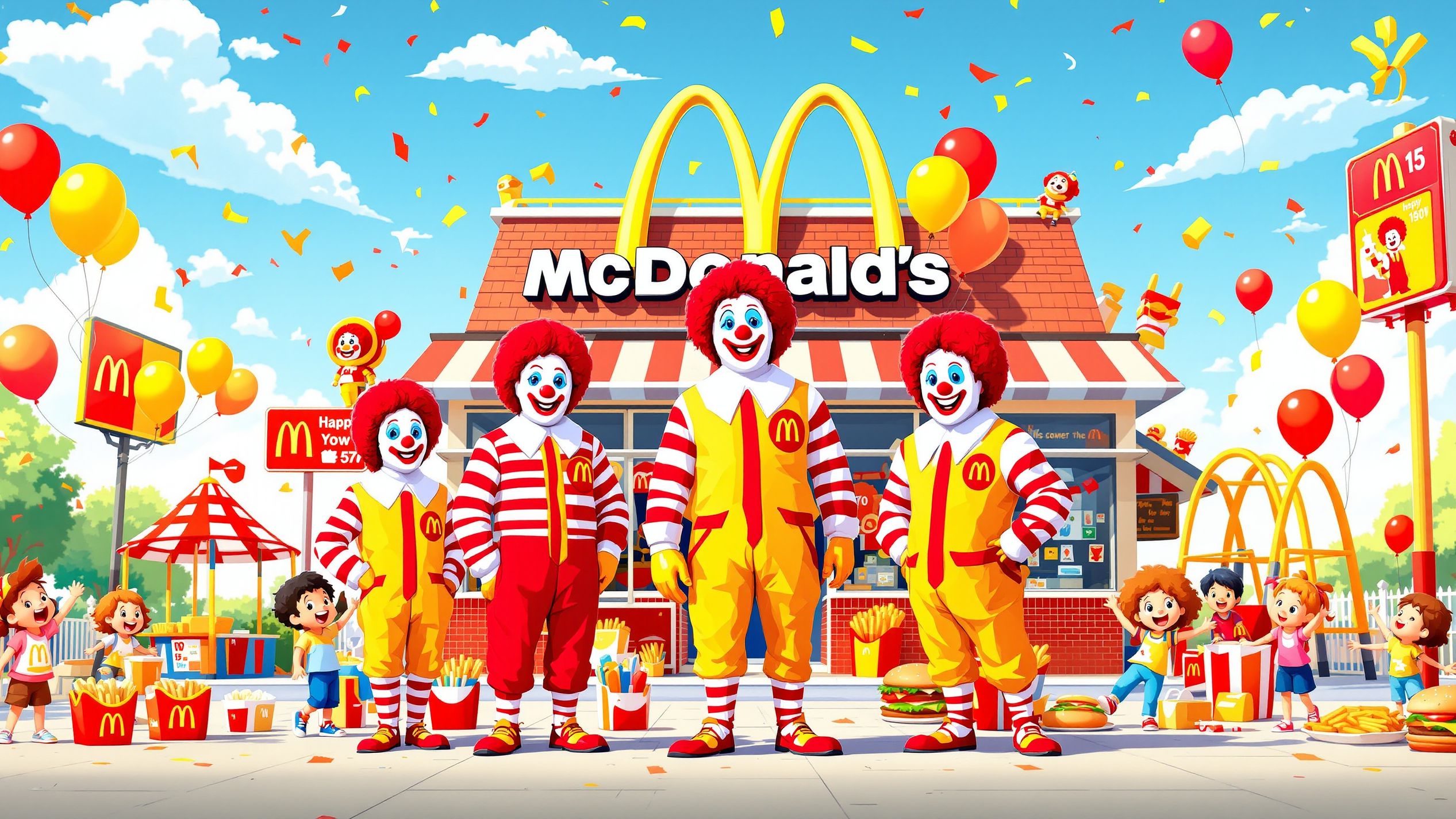
For more than 60 years, Ronald McDonald has been one of the most recognizable advertising mascots in history. With his bright red hair, oversized clown shoes, yellow jumpsuit, and infectious smile, he became the face of McDonald’s for generations of families around the world. While millions recognize Ronald instantly, many people don’t know the fascinating stories behind his creation, the actors who portrayed him, or how dramatically he evolved over the decades. Here are ten fun facts about Ronald McDonald that might surprise even his biggest fans.
#1: Ronald McDonald Was Originally Played by a Local TV Clown
Many people assume Ronald McDonald was created by McDonald’s headquarters, but the first Ronald actually appeared in 1963 thanks to Willard Scott, a local Washington, D.C., television personality best known for portraying Bozo the Clown. After Bozo’s local television run ended, Scott created Ronald McDonald for a series of McDonald’s commercials. His original costume looked very different from today’s version, featuring a paper cup for a nose and a fast-food tray as a hat. It was quirky, colorful, and unlike anything audiences had ever seen. Scott’s performance helped introduce Ronald to America and launched one of the most famous mascots in advertising history.
#2: His Original Costume Looked Completely Different
If you compare Ronald’s first appearance to his modern design, it’s hard to believe they’re the same character. Early versions featured a striped paper cup on his nose, a hamburger-shaped belt, and a hat made from a McDonald’s tray filled with fries, burgers, and drinks. The outfit looked homemade compared to the polished costume fans know today. As McDonald’s expanded nationally, designers gradually simplified Ronald’s appearance into the bright yellow jumpsuit, red wig, striped sleeves, and giant red shoes that became his signature look.
#3: More Than a Dozen Actors Have Played Ronald
Ronald McDonald has never been portrayed by just one person. Over the decades, numerous professional actors, clowns, and entertainers have worn the famous costume. Each performer underwent specialized training to maintain Ronald’s cheerful personality, mannerisms, and movements so audiences experienced the same character regardless of who was behind the makeup. The role required energy, physical comedy, improvisation, and the ability to entertain children at events all over the world.
#4: Ronald Had His Own Group of Friends
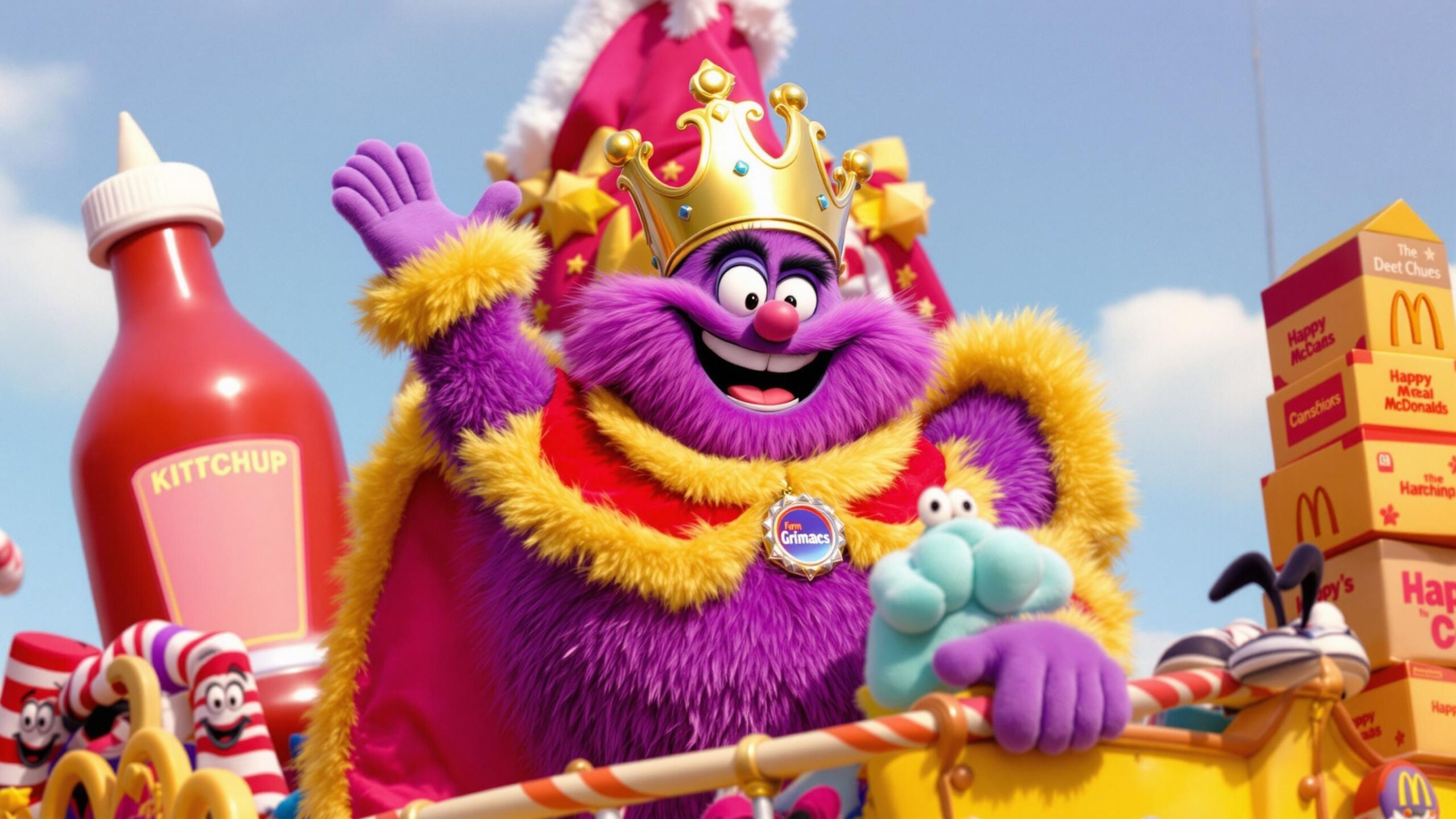
Ronald wasn’t the only resident of McDonaldland. During the 1970s and 1980s, he starred alongside memorable characters including Grimace, Hamburglar, Mayor McCheese, Birdie the Early Bird, Captain Crook, the Fry Kids, and Professor. Together they created a whimsical fantasy world that appeared in television commercials, books, toys, coloring pages, and even video games. McDonaldland became one of the most imaginative advertising universes ever created, helping Ronald become much more than just a restaurant mascot.
#5: He Starred in Movies, Cartoons, and Video Games
Ronald McDonald expanded far beyond television commercials. He appeared in animated direct-to-video movies, educational specials, comic books, video games, children’s storybooks, and countless Happy Meal promotions. Kids could watch Ronald’s adventures at home while collecting toys featuring him at the restaurant. His growing media presence helped him become one of the most recognizable fictional characters of the late twentieth century.
#6: Ronald Became a Global Celebrity
Although Ronald McDonald began in the United States, he quickly became an international icon. Versions of Ronald appeared in countries around the world, often speaking local languages and participating in community events unique to each culture. While his costume remained mostly the same, his commercials and performances were adapted to fit local traditions. Few advertising mascots have achieved the same level of worldwide recognition, making Ronald one of the most famous clowns in history.
#7: Ronald Helped Inspire Ronald McDonald House Charities
One of Ronald’s most meaningful contributions came through Ronald McDonald House Charities, established in 1974. The organization helps provide housing and support for families with seriously ill children receiving medical treatment away from home. Although the charity operates independently, Ronald became its symbolic ambassador, helping raise awareness and encouraging charitable giving. Today, Ronald McDonald House Charities operates hundreds of locations around the world, making a lasting impact on millions of families.
#8: Ronald’s Popularity Led to Mountains of Collectibles
Over the years, Ronald McDonald has appeared on thousands of collectible items including action figures, plush toys, watches, lunch boxes, mugs, signs, ornaments, trading cards, plush dolls, holiday decorations, and vintage restaurant displays. Serious collectors continue searching for rare Ronald memorabilia, with certain vintage figures and promotional items becoming highly valuable. Entire museums and private collections have even been dedicated to McDonald’s history and Ronald merchandise.
#9: His Public Appearances Became Less Common
Beginning in the 2010s, Ronald McDonald gradually appeared less frequently in advertising. As marketing strategies shifted and public attitudes toward clowns changed, McDonald’s reduced Ronald’s presence in many campaigns. Rather than retiring him completely, the company quietly transitioned toward food-focused advertising. Even though he isn’t seen as often today, Ronald remains one of the most recognizable symbols in the brand’s history.
#10: Ronald McDonald Is Still One of the Most Recognizable Mascots Ever Created
Despite appearing less frequently in recent years, Ronald McDonald remains one of the most famous advertising characters ever created. Multiple generations grew up watching his commercials, celebrating birthdays at McDonald’s, collecting Happy Meal toys, and exploring McDonaldland through television specials. His bright costume, friendly personality, and unmistakable smile continue to evoke nostalgia for millions of people around the world. Few mascots have maintained such lasting cultural impact for more than six decades.
Conclusion
Ronald McDonald is much more than a clown who sold hamburgers—he became a worldwide cultural icon whose influence stretched across television, charities, toys, movies, and childhood memories. Whether you remember his magical adventures through McDonaldland or simply recognize his bright yellow outfit from family trips to McDonald’s, his legacy remains unmatched in fast-food history. These fun facts show that behind the red wig and oversized shoes is a fascinating story that helped shape one of the most successful mascots ever created.